
Beyond its majestic brick spires, Bagan is internationally celebrated as the cradle of Myanmar’s traditional lacquerware (yun-de). Practiced continuously since the Pagan Empire of the 11th century, this painstaking art form thrives today within the artisan hamlets of Myinkaba village. Crafting an authentic piece of lacquerware is a true marathon of patience and devotion: woven ribbons of fine bamboo, teakwood, or supple horsehair are layered with sap tapped from wild lacquer trees (thit-see), cured inside subterranean cellars, and hand-polished across dozens of cycles spanning up to six months.
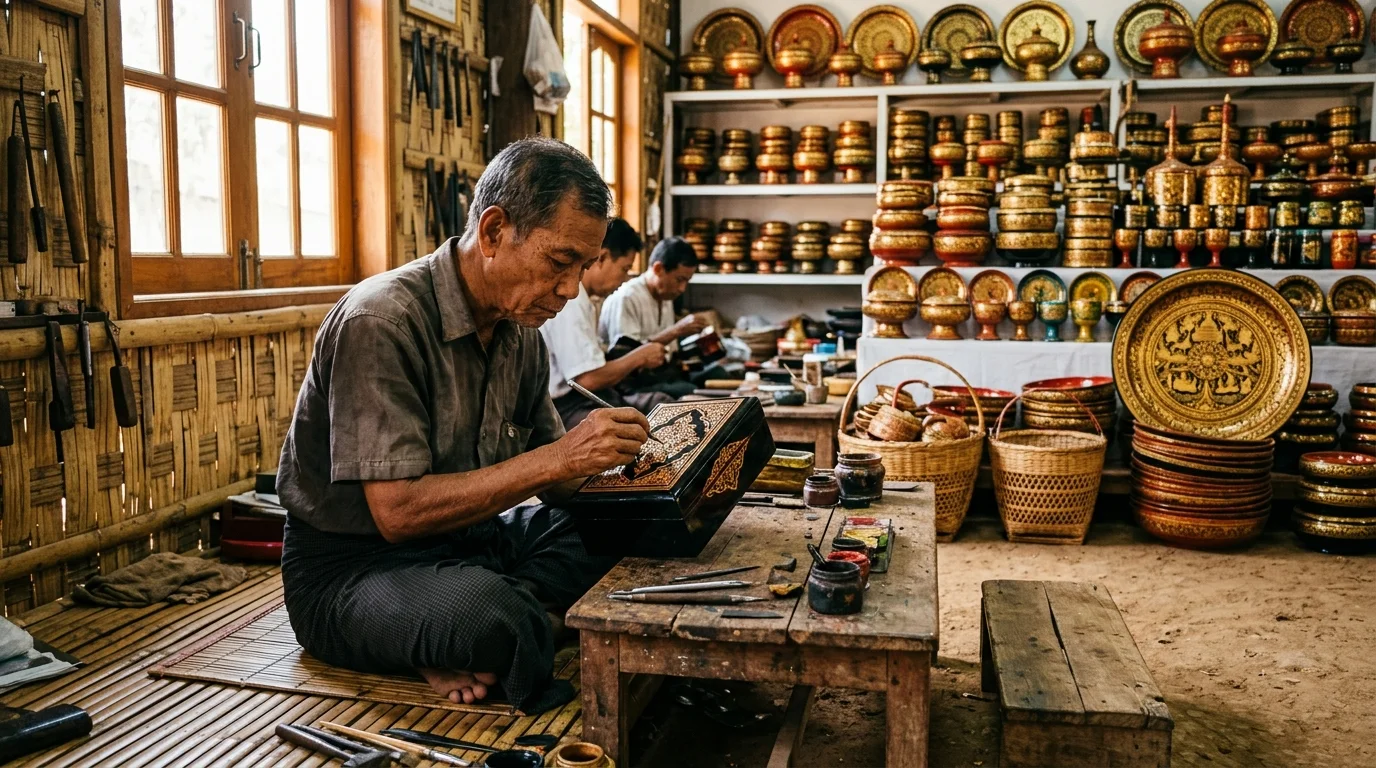
Stepping into a family-run workshop in Myinkaba offers a mesmerizing glimpse into living cultural history. Master craftsmen sit cross-legged at low timber benches, using fine steel styluses to engrave microscopic floral arabesques (kanote), celestial spirits, or scenes from Buddhist lore entirely freehand from memory. Layers of natural cinnabar red, yellow ochre, and pure beaten gold leaf (shwe zawa) are rubbed into the incisions, producing heirloom-quality bowls, teacups, trays, and caskets that are not merely ornamental, but remarkably durable, waterproof, and flexible.
Shopping in Bagan extends beyond lacquerware to a rich variety of cottage handicrafts that celebrate central Myanmar’s creative spirit. Travelers can browse hand-spun organic cotton shawls woven on traditional village looms, sand paintings delicately textured to mirror ancient temple murals, hand-carved marionettes, and artisan palm-sugar treats. Purchasing directly from artisan workshops and village studios ensures you take home an authentic, handcrafted fragment of Bagan’s soul while directly uplifting the multi-generational artisan families whose skills keep this heritage alive.
More Travel Stories
View All