

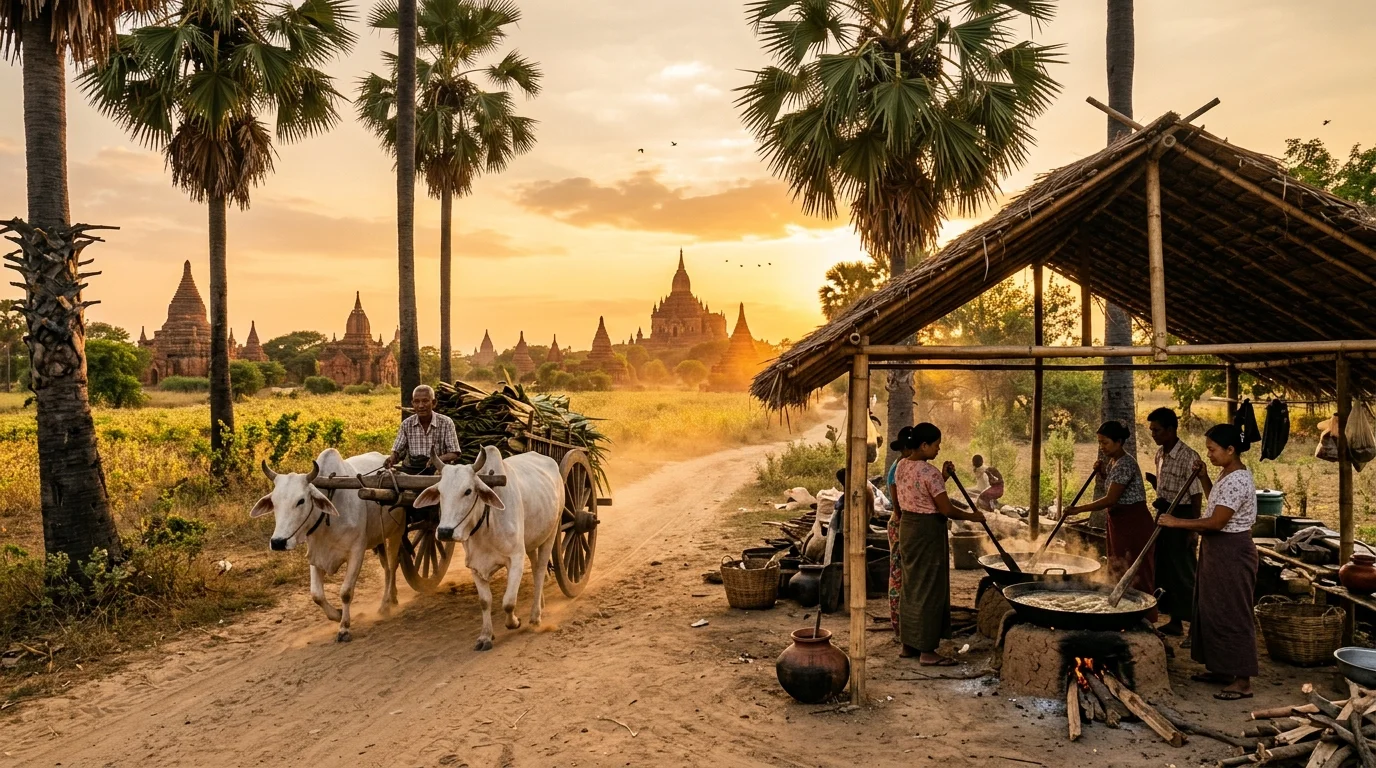
While the monumental brick temples of Bagan capture global imagination, the true beating heart of the region thrives within its pastoral villages and historic agrarian traditions. Stepping away from the main tourist circuits into rural hamlets like Minnanthu, West Pwasaw, and Myingabar transports travelers into an unhurried realm where daily life flows in harmony with nature. Traditional wooden ox carts drawn by white humped bullocks meander along sandy lanes, while warm-hearted villagers greet visitors with radiant smiles, fragrant Thanaka paste, and boundless Myanmar hospitality.
Central to central Myanmar’s rural identity is the towering toddy palm (htan pin), revered as the “tree of life.” In open-air groves (htan taw), agile palm climbers ascend dizzying heights on slender bamboo ladders to tap sweet sap into earthenware pots twice daily. Under rustic thatched shelters, local women boil the collected nectar inside massive iron pans over open wood fires, skillfully stirring the molten syrup until it crystallizes into organic htanyet (palm jaggery). Watching this artisanal process and tasting sweet, warm jaggery straight from the pan is one of the most delightful cultural experiences in the dry zone.
Exploring these rural communities offers an intimate connection to the living culture that sustains Bagan. Visitors can observe women spinning organic cotton on antique timber wheels, witness traditional oxen-driven peanut oil mills, and take a gentle ox-cart ride across sesame fields as the late afternoon sun casts long golden silhouettes behind ancient stupas. Interacting with local village families is a profound reminder that Bagan is not merely an archaeological sanctuary of the past, but a cherished, vibrant home filled with enduring human warmth.
More Travel Stories
View All