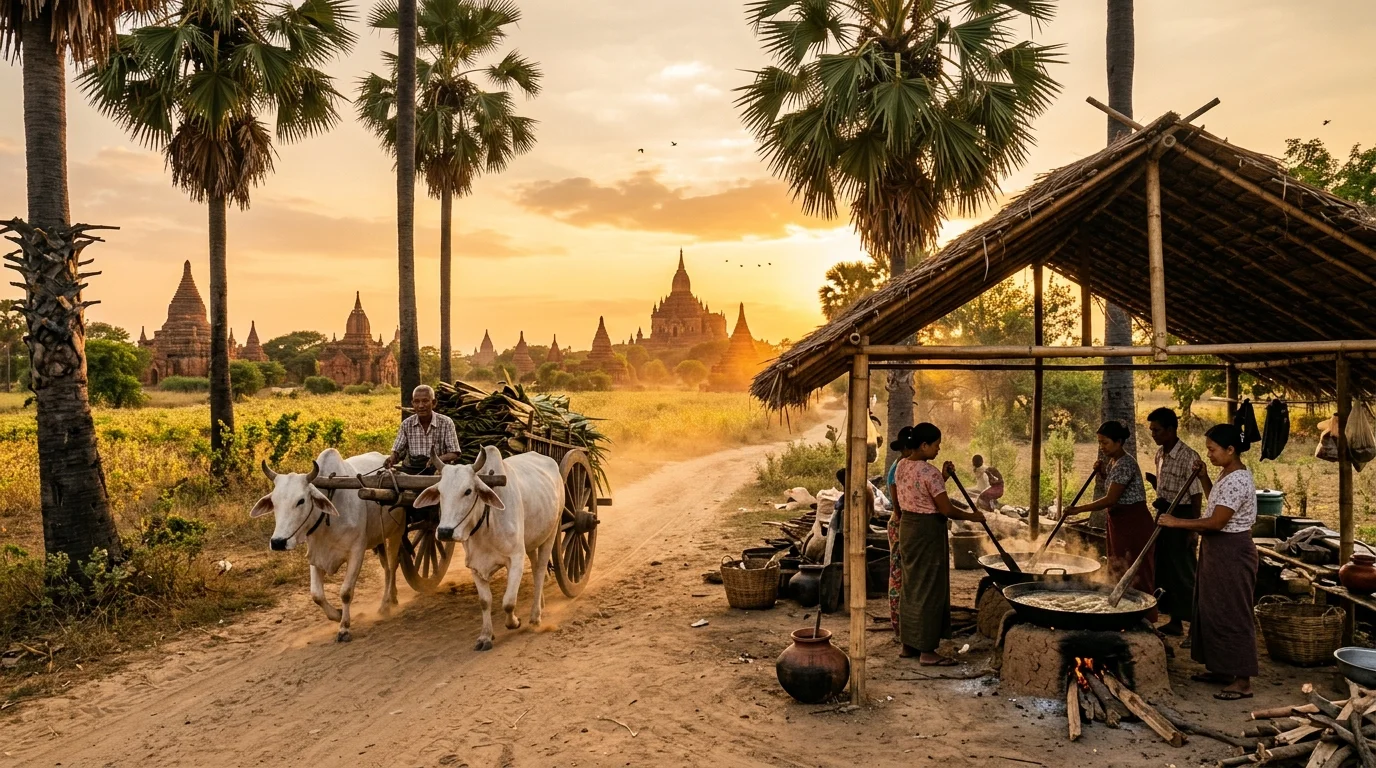



To step across the threshold of an ancient Bagan temple is to enter an extraordinary masterclass of medieval Asian architecture. Erected predominantly between the 11th and 13th centuries under the ambitious monarchs of the Pagan Kingdom, these thousands of monuments represent a staggering engineering achievement. Ancient architects and stone masons perfected pointed barrel vaults, interlocking brick arches, and sophisticated natural ventilation systems that channel cooling breezes through thick walls—maintaining remarkably temperate interiors even under the fiercest tropical sun without a single speck of modern cement.
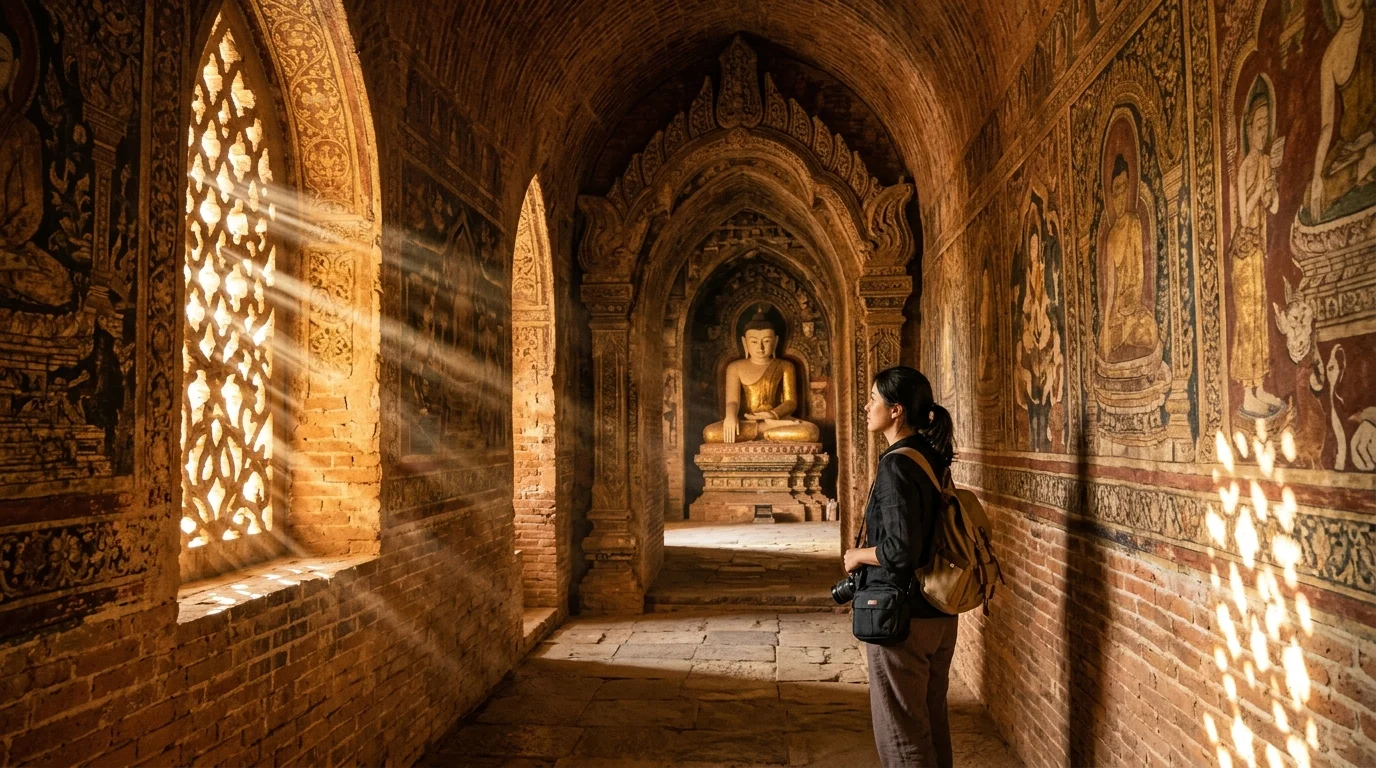
While the monumental facades command awe from afar, the most intimate treasures of Bagan reside within its cool, dimly lit corridors. Passing barefoot through the grand archways of temples such as Sulamani, Gubyaukgyi, and Nagayon reveals breathtaking fresco murals painted nearly a thousand years ago. Inscribed with early Mon calligraphy and rendered in rich natural earth pigments of cinnabar, indigo, and soot, these intricate paintings depict the 550 Jataka tales, celestial beings (devas), and royal processions that have miraculously endured through the centuries.
To fully absorb the architectural grandeur of Bagan, travelers should complement visits to famous icons like Thatbyinnyu and Ananda with quieter explorations of hidden subterranean cave shrines (kyauk-ku-umin) and brick monastic libraries (pitakat-taik). Notice how natural sunlight filters through perforated stone lattice windows (pyadaing), casting intricate geometric shadows across polished stone pavements. Sightseeing in Bagan is far more than ticking off landmarks; it is a reverent pilgrimage through human ingenuity, spiritual devotion, and artistic triumph etched indelibly in clay and brick.
More Travel Stories
View All